Handing Someone Else the Keys
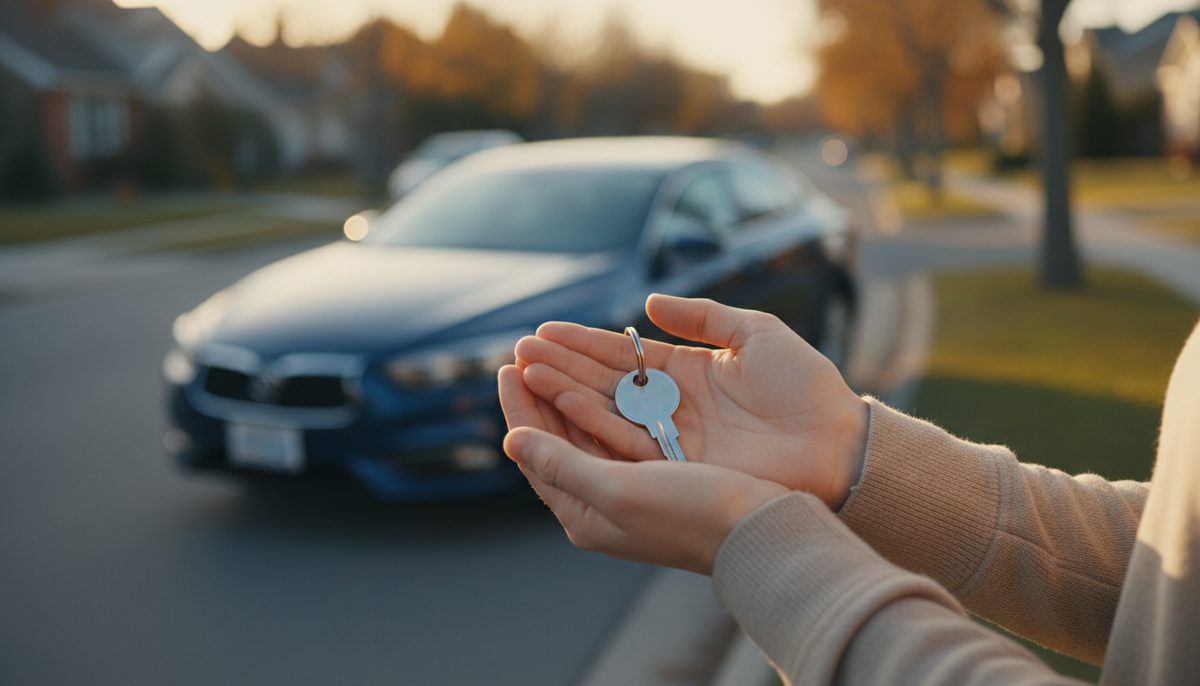
Somebody asks to borrow your car for an afternoon. The general principle in California personal auto insurance is that coverage follows the vehicle, so a person driving your car with your permission is typically operating under your policy rather than their own. That is the starting point, and then there are the details that decide real cases.
Permission is the hinge
The concept in the policy is usually described as permissive use: driving with the reasonable belief that the owner allowed it. Permission does not have to be written or formal. What matters is that it existed. Someone who takes the car without your consent is in an entirely different category, and so is someone you specifically told not to drive it.
Readers who want the paperwork side can follow the guide to whose insurance pays when a friend crashes your car, which lists what the DMV and the carrier each need.
Your policy, your limits, your record
This is the part people underestimate. If your friend causes a collision in your car, it is generally your liability coverage that responds, up to your limits. If the harm exceeds those limits, the exposure does not evaporate. This is a concrete reason to look hard at whether the minimums in Vehicle Code section 16056, which since January 1, 2025 are $30,000 per person, $60,000 per accident and $15,000 for property damage, are really the right numbers for a car other people drive.
A claim on your policy is a claim on your policy, regardless of who was behind the wheel.
Where an occasional loan becomes a listed driver
There is no universal mileage or day count that flips the switch, and any page that gives you one is inventing it. What carriers look at is regular use and access. A cousin who borrows the car twice a year is one thing. A cousin who uses it to get to work every week, or who lives at your address, is a driver the carrier expects to know about. If you are unsure which side of the line you are on, describe the pattern to your agent and let them tell you.
Three situations that fall outside
- An excluded driver. If someone is named as excluded on your policy, lending them the car means there is no coverage for that trip. This is the single most expensive mistake in this whole subject.
- An unlicensed driver. Handing the keys to someone without a valid license is a separate legal problem and a likely coverage problem at once.
- Driving for pay. Delivery or ride-hail use is generally outside a standard personal auto policy. That needs its own conversation and its own coverage.
A short habit before you hand over the keys
Confirm the person is licensed, confirm they are not excluded on your policy, and make sure the insurance card is in the car, since Vehicle Code section 16028 requires the driver to be able to show evidence of financial responsibility on demand. Thirty seconds, and it covers almost everything.
The same question in the other direction
When you are the borrower, the analysis flips but the logic holds. You are generally driving under the owner's policy and inside the owner's limits, which you almost certainly do not know. Ask two things before you take the keys: is the car insured right now, and am I excluded on the policy.
If you carry your own auto policy, it may provide some coverage when you drive someone else's car, and how that works depends on your policy language. It is worth reading that section once, calmly, rather than discovering it in a parking lot.
If people borrow your car regularly, tell us, and we will make sure the policy is built for that.
Get this quoted for your situation
Free quotes from multiple carriers, prepared by a licensed California agent. Two minutes, no obligation.
Get My Free QuoteMore of what callers ask
If my friend crashes my car, whose insurance pays?
Coverage generally follows the vehicle, so your policy is normally the one that responds, subject to its terms and limits. The specific answer depends on your policy language and the circumstances, which is why permission and driver status matter so much.
Does a claim caused by someone else affect my policy?
It is a claim on your policy, so yes, it becomes part of your policy's history. How that is treated at renewal is set by the carrier's filed rules, so ask your agent what the specific company does.
How often can someone borrow my car before they need to be listed?
There is no fixed number, and anyone quoting one is guessing. Carriers look at regular use and household access. Describe the actual pattern to your agent and let the company apply its own rule.